With Alpine trips on the horizon, a basic snowcraft course was scheduled and Tiffany and Mike kindly stepped up to lead it. The course was highly oversubscribed, with only 8 spaces, so those of us who were selected were extremely appreciative.
We all met at the club gear room on a Wednesday evening to cover some theory. During introductions around the table, we shared some of the reasons why we were interested in doing snowcraft. Some shared stories of encountering snow and ice on previous trips and feeling unsafe, others wanted to learn new skills and build more confidence in the Outdoors. Many wanted to get into doing alpine trips, and some mentioned they were interested in alpine hazard identification. Despite our varying goals, it was clear we were all in the right place.
Everyone was allocated the following club gear – an ice axe, a helmet and crampons (which were fitted to our boots). We then learned about how the snow pack is shaped by weather, avalanche forecasting, and safe route planning.
Just over a week later, we met at Wellington Train Station and convoyed to the club’s lodge on Mount Ruapehu, stopping for dinner in Bulls. Once at the Lodge, we met Mike’s partner, Caryl, and their young daughter, Mahala—already a budding alpinist. After a quick induction, we turned in for the night.
Friday
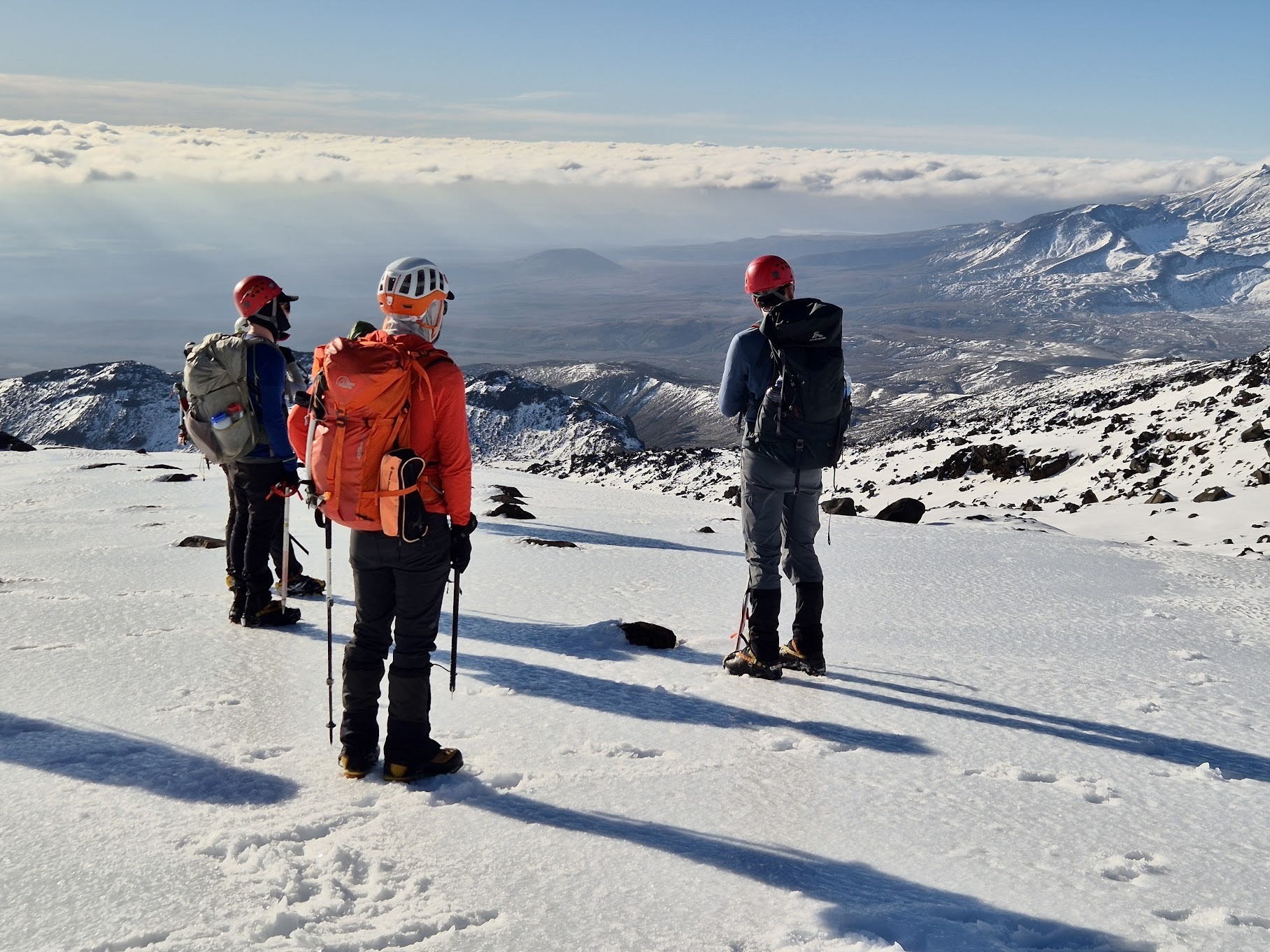
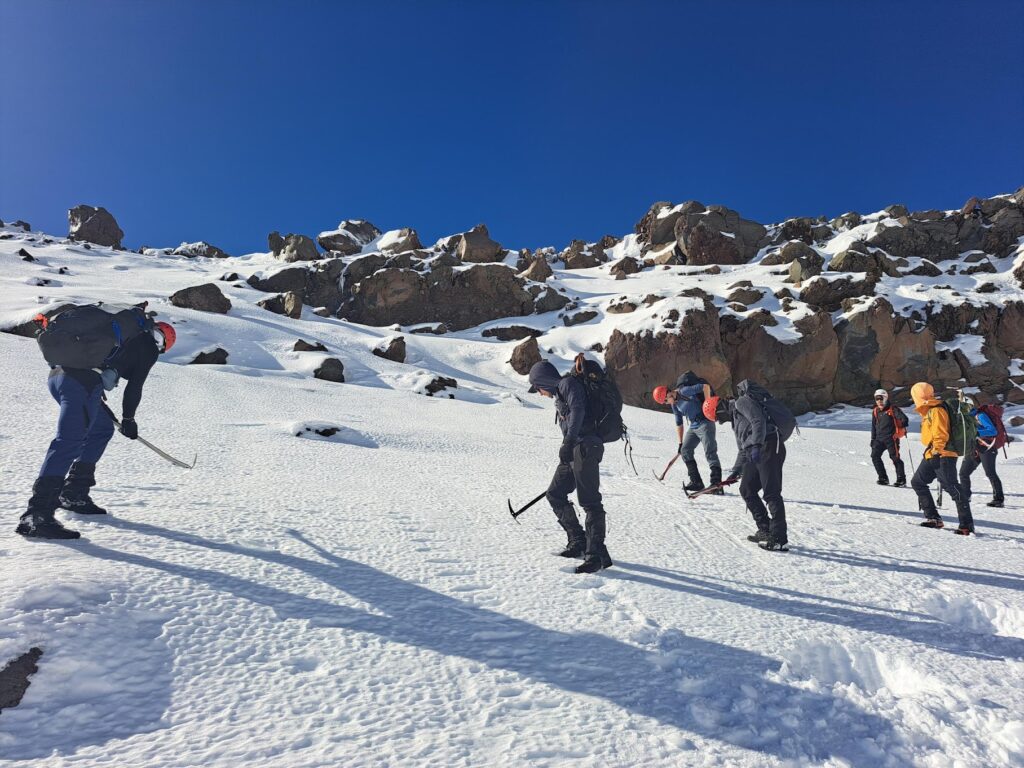
A pink-tinged dawn revealed clear views of Mt Ruapehu and Taranaki Maunga and so excitement levels grew for the day ahead. Ellis’s enthusiasm for early morning alpine starts had not yet spread, so we left the lodge at around 8.30 am (with day packs) and headed towards the Tararua Tramping Club Lodge. Here we donned crampons for the first time. Their grip and stability on hard ice was instantly reassuring. We practised proper ice axe use—leash secured, upslope hand—then continued up to the NZ Alpine Club (NZAC) lodge. The NZAC lodge is extremely well situated – near slopes where skills can be practised.
During a snack break, Ellis demonstrated responsible gear anchoring, planting his carrot in the snow, and then we headed down a steep slope to practise crampon footwork.
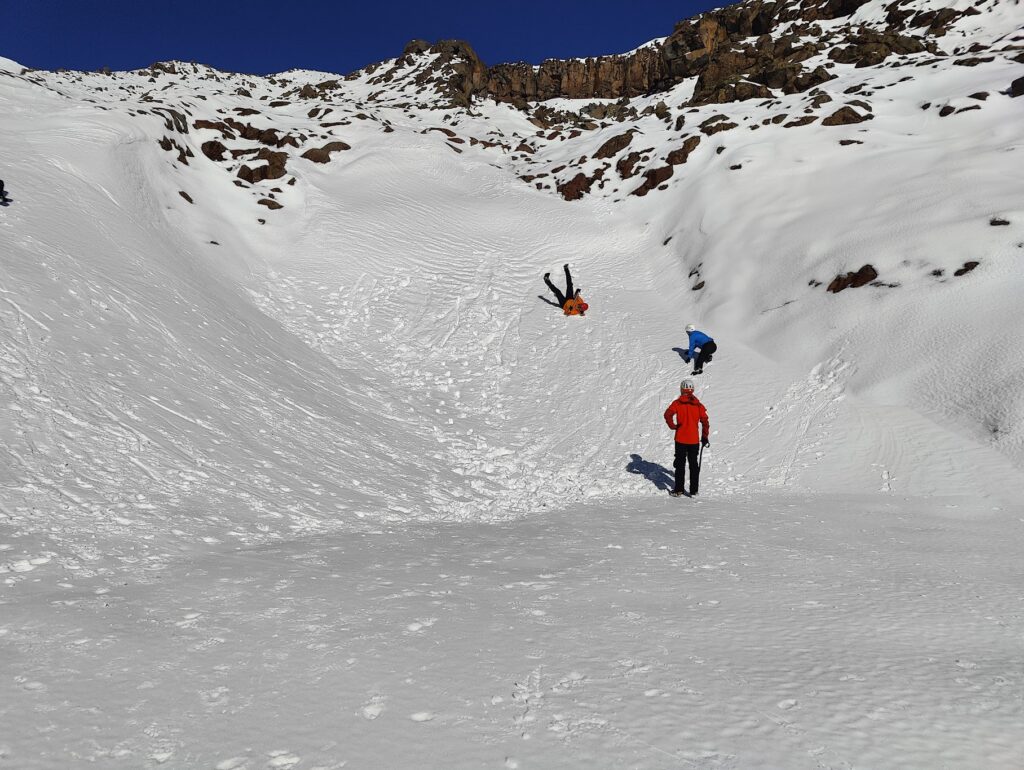
A nearby gully with soft snow provided the setting for the most fun lesson of day one – self-arrest. It didn’t take long to grow confident sliding down the slope and plunging the picks of our axes into the snow. We started feet first with our ice axes in our dominant hand, and then in the other hand. We also had a go at self-arresting from a head-first direction. The particularly adventurous people in the group also attempted head-first self-arresting on their backs. This required another person to hold your feet as you lowered into position – except for AJ, who was adept at hurling himself down the slope.
In the afternoon we learnt how to cut steps with our ice axe and front point, before making our way back to the WTMC Lodge via Whakapapa ski field.
Having spent 7 hrs on our feet under an intense sun, we were all becoming aware of how harsh the UV factor can be in the alpine environment. Those of us with alpine sunglasses noted a significant benefit, while some with regular sunglasses felt headaches coming on.
Having learnt so many skills already by this stage of the weekend, we were mentally fried and easily distracted. We found a stream running beneath a layer of ice above Broken Leg Gully, which Ethan had fun breaking through with his axe. We debated, but never quite decided, whether water from a stream running off a commercially-operated ski field was safe to drink.
Once back at the WTMC lodge, we made dinner and met a large group that had arrived for a weekend of skiing and snowboarding. What had been a quiet lodge in the morning was now all go!
We covered some more theory, got some hands-on practice with avalanche transceivers and probes and then all crawled off to bed exhausted.
Saturday
We left the lodge again at 8.30 am, this time wearing avalanche transceivers and each carrying a probe and snow shovel.
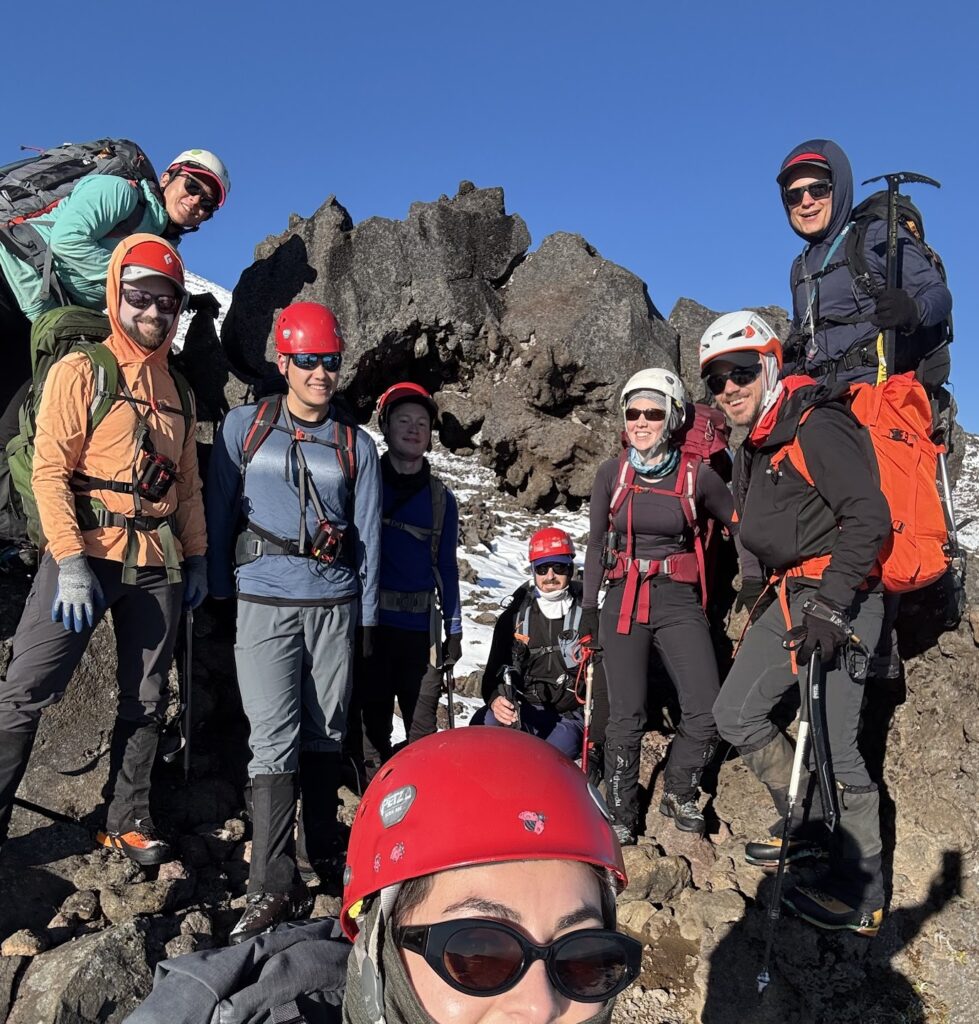
We headed westward, rather than up the mountain, to begin with, as Tiffany teased that Mike had a cool rock to show us. Mike was less sure of his ability to lead us to the rock, so he remained extremely coy about what we could expect. Nevertheless, we were all impressed when we arrived before an arch of volcanic rock. We took a group selfie under the direction of India, who was uploading content to the WTMC Instagram account as we went.
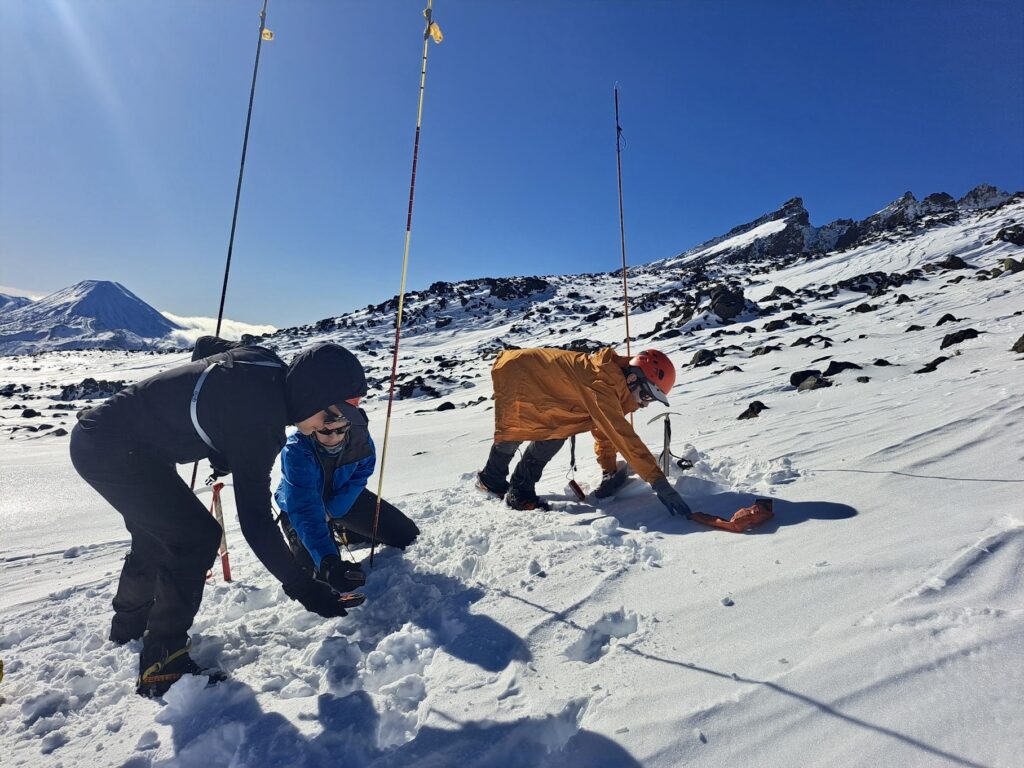
We then found some slopes with deeper snow – suitable for burying avalanche transceivers. Mike and Tiffany walked in opposite directions with snow shovels and hid their transceivers inside bothy bags. After splitting into two groups, we switched our transceivers from ‘send’ to ‘receive’ and followed the signal to the buried transceivers.
After finding the approximate positions of each transceiver, we used avalanche probes to find the bothy bags they were contained in. The bags felt squidgy under the probe (presumably what a person feels like) and once we had their exact position, we went downslope and dug them out with snow shovels.
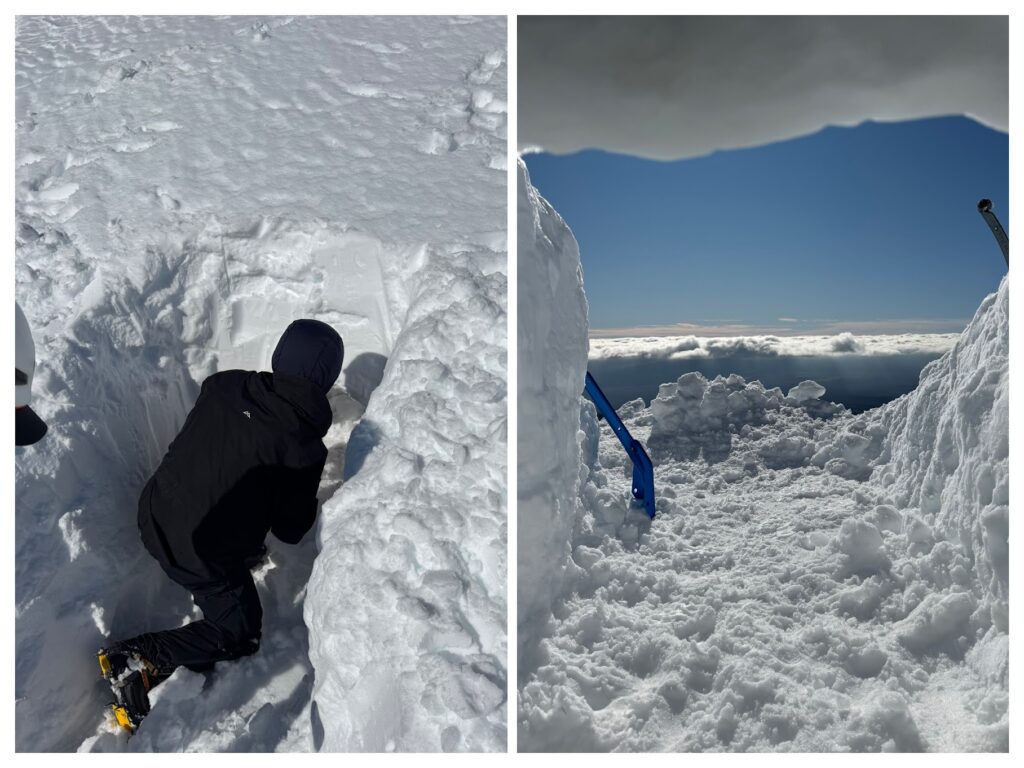
Mike and AJ then demonstrated how to perform a hand shear/snow pack test to determine avalanche risk. Seeing that the snowpack was stable, we then decided to dig some snow caves. The task of digging a big hole turned all 9 of us adults into children and we spent the next two hours making caves in teams. Cave one, largely dug by Ellis (with help from Mike, James, Ashleigh and India) ended up being large enough to squeeze all 9 of us inside.
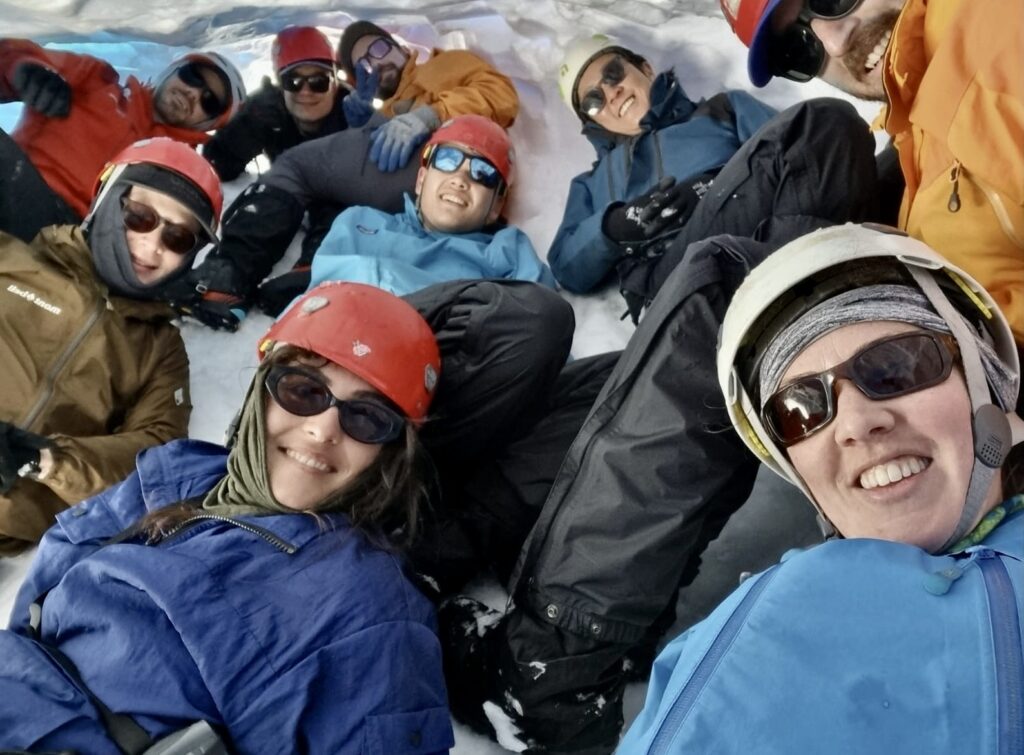
Cave two, dug by Ethan, AJ, Aidan and Tiffany, was much narrower, but was constructed as a tunnel to join up with cave one.
It was difficult for all 9 of us to dig at once, so some people had to assist in other ways -by building snowmen or adorning the entrances to the caves with snowballs.
Ethan also showed us that you can break the speed of sound if you slide down the slope on a plastic ground sheet.
Cave digging was easily the highlight of day two!
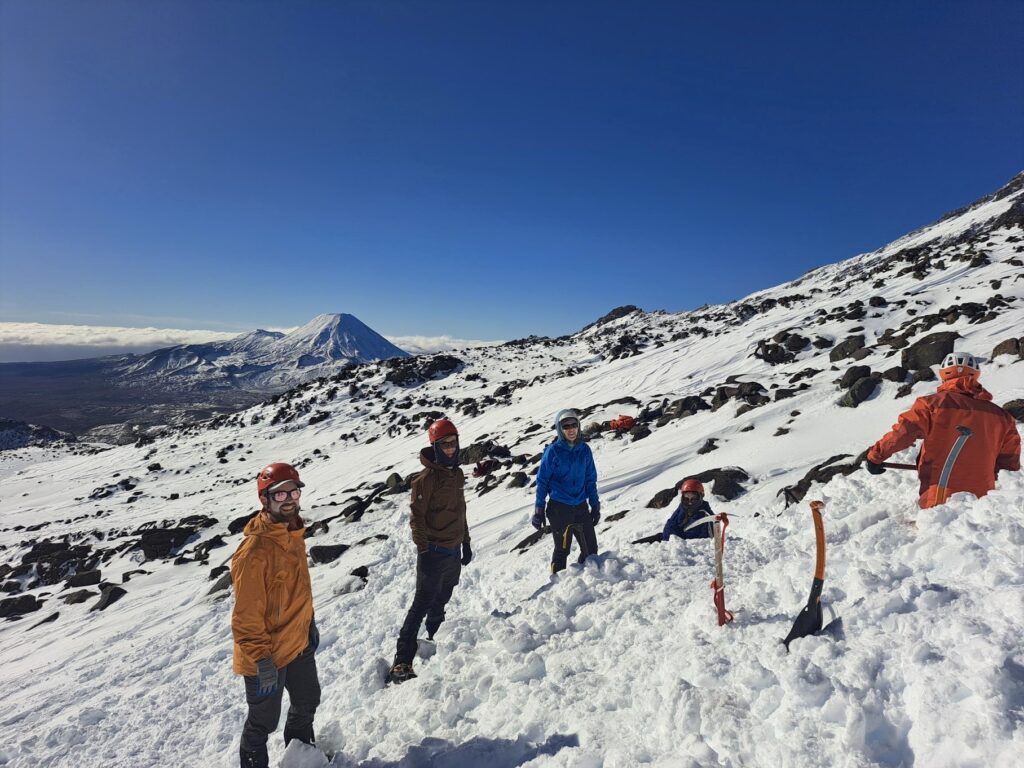
We eventually made our way back to the WTMC lodge via the NZAC lodge, stopping to practise skills on the icy slope below it. Some of us practised self-arrest on the harder ice. This was much less comfortable than self-arrest on soft snow, but it was interesting to see how much more abruptly you arrest once the pick of the ice axe gets lodged in the ice.
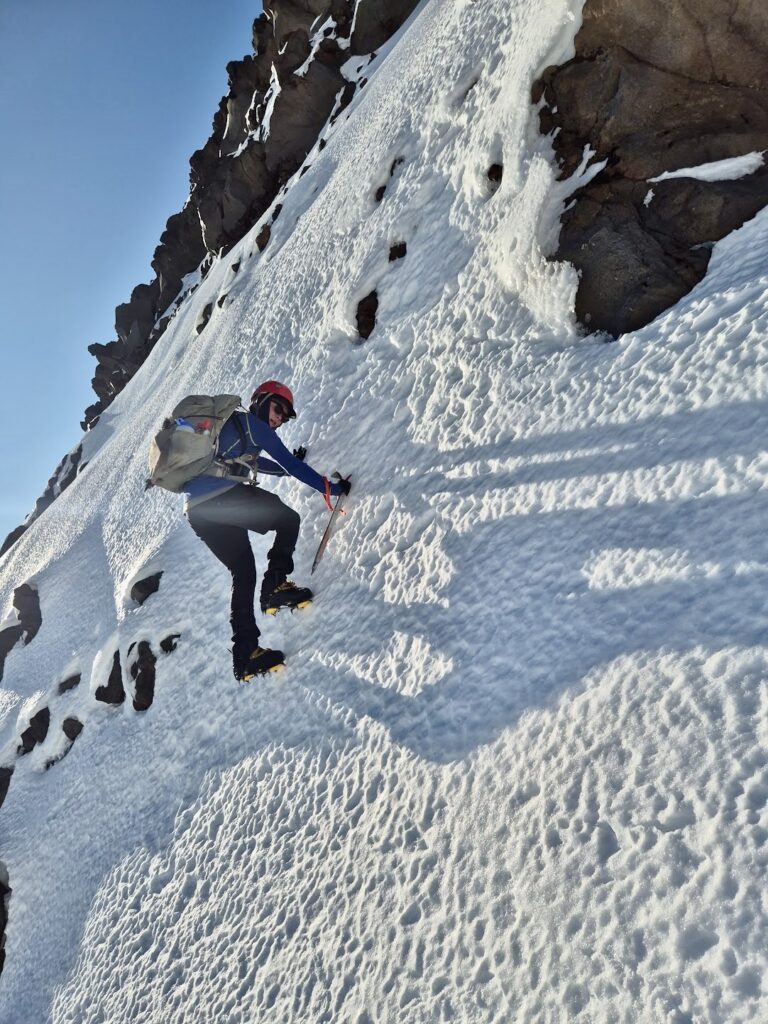
Some practised their front pointing on the steeper slopes – and got people in the group to take photos of them with suspiciously exaggerated gradients.
On the way back to the WTMC lodge, the plate in one of Aidan’s crampons came loose. Fortunately, there was a spare pair of crampons at the lodge for him to use the next day. However, it was a cautionary reminder that gear can fail.
We all headed to bed early ahead of an early alpine start the next day.
Sunday
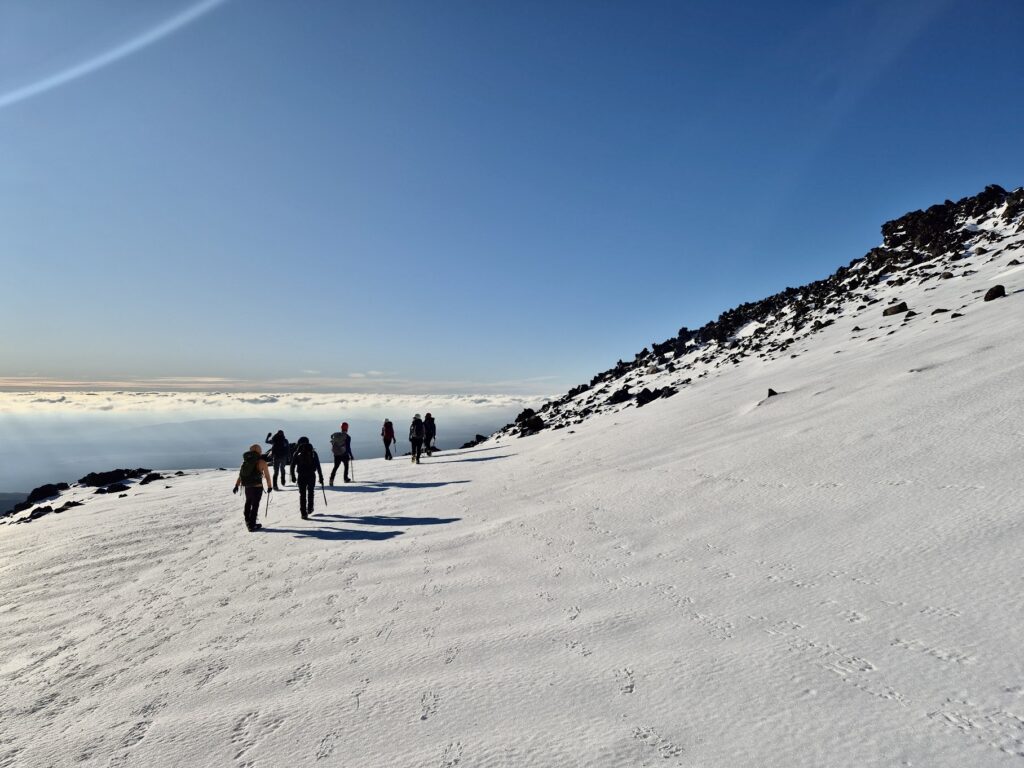
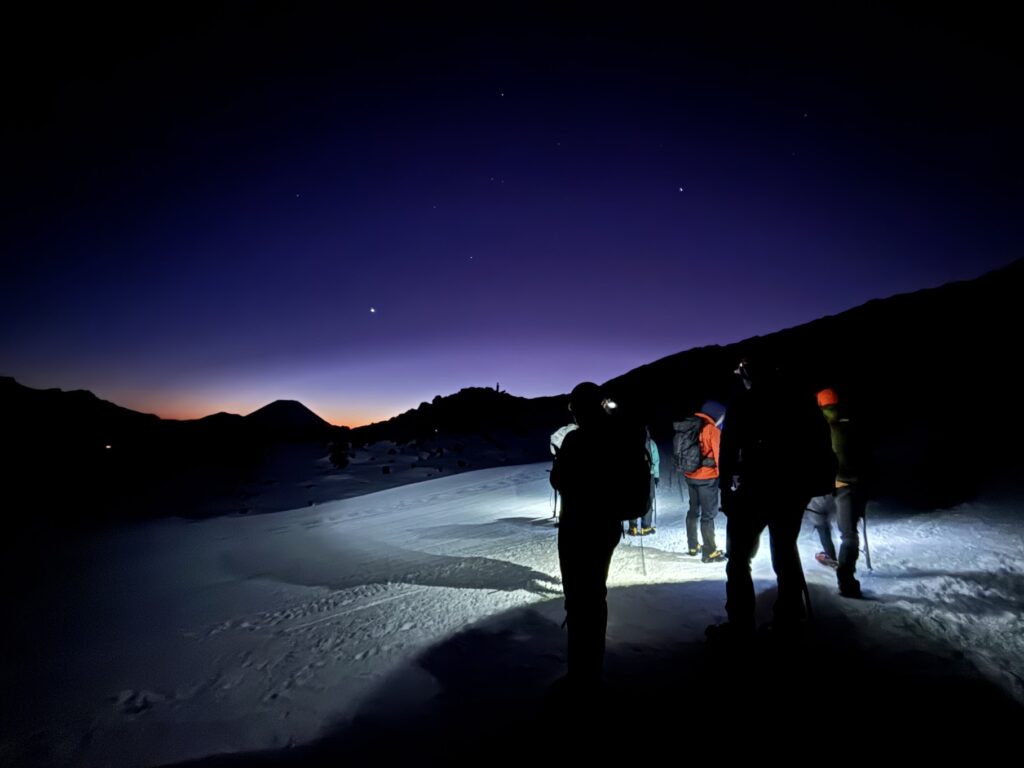
After getting up at around 5.30 am, we left the lodge at 6.30 am and made our way up Whakapapa ski field. Once past the Rock Garden, we left the ski field and headed straight towards Pinnacle Ridge. The slope looked challenging and was a maze of rock bands.
Tiffany explained that it is important to come up with a plan while you can see the whole route, rather than having to route-find while you’re amongst obstacles (which could obscure terrain traps like bluffs). She took a picture of the ridge face for later reference, and her and Mike discussed options.
It looked like there was a route that would lead us through good snow to a small gap in a high rock band, just below the top of the ridge. To entice the more anxious people in the group, Tiffany teased that there was a cool rock to show us that was even more impressive than the one from the day before.
Despite a mix of soft deep snow and firm ice underfoot, a few of us grew nervous about the increasing exposure as we gained elevation. However, we were soon distracted by another rock arch – which was even bigger than the one we had seen the previous day.
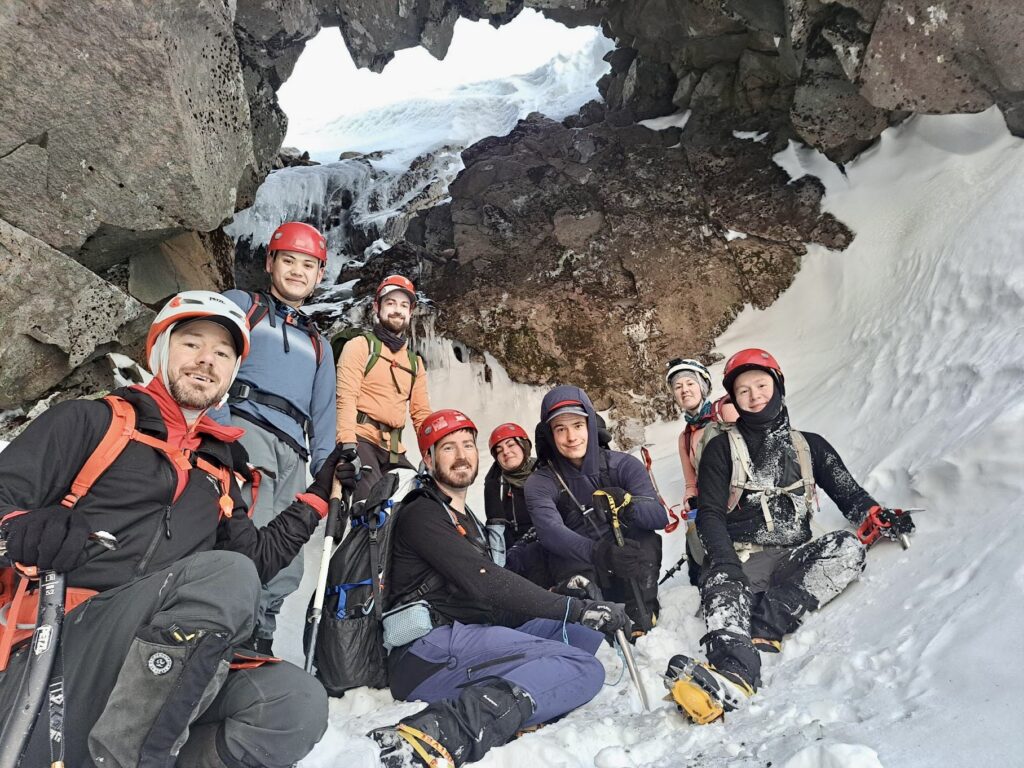
We sidled across a steep section of soft snow, then had a short climb up a snow wall to reach a level platform beneath the rock arch. Behind the arch was an impressive ice wall and after squeezing the whole group onto the confined platform, we took another triumphant selfie.
Getting ourselves back down from the platform was a trickier prospect, as we had compromised the snow we had climbed up. Mike found a suitable down climb route with undisturbed snow, and then kicked steps for us to follow in. The more anxious of us went first, as the steps got progressively weaker as each person came down them, and we successfully returned across our sidle path to firmer snow.
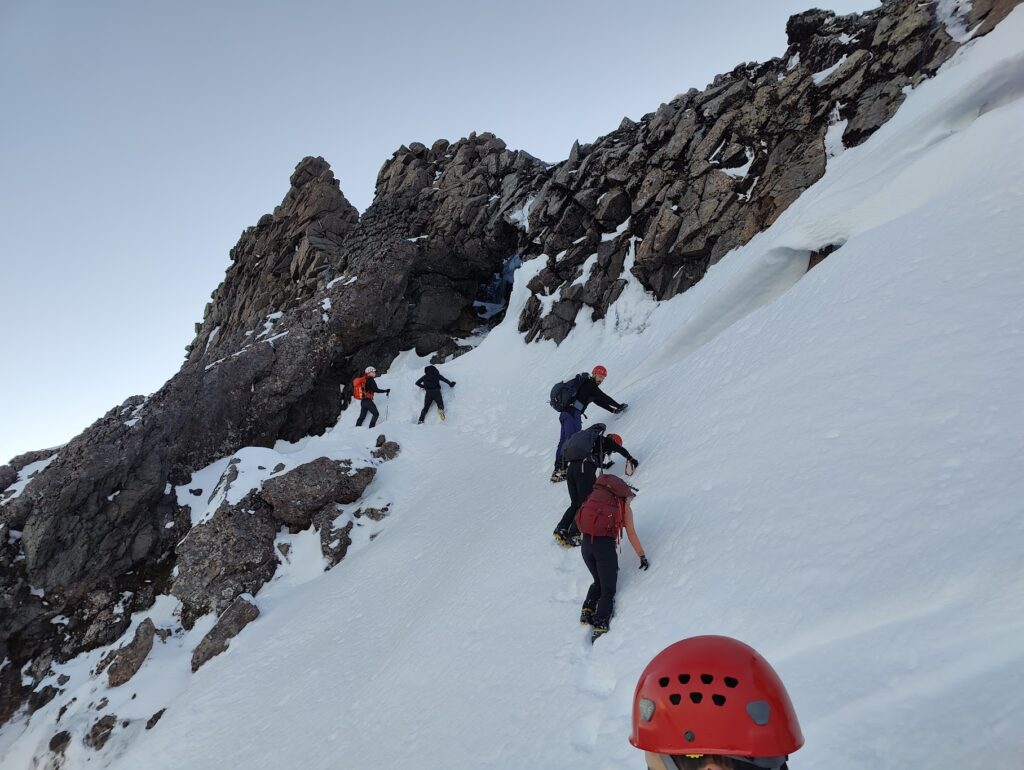
Continuing up the mountain, we hit one last hurdle – a short rock scramble. While not particularly difficult looking, the exposure at this point and the need to climb in crampons made the scramble feel spicier than usual. Once past the rock scramble there was a clear path to the top of the ridge, just above the 2000 m contour. Here we basked in the first sun we had seen all day, had a snack break, and took in the views of Mt Ngauruhoe and Tama Lakes. We were feeling proud of having made it to the top of the ridge, but no one relaxed yet, as we knew we had to get back down!
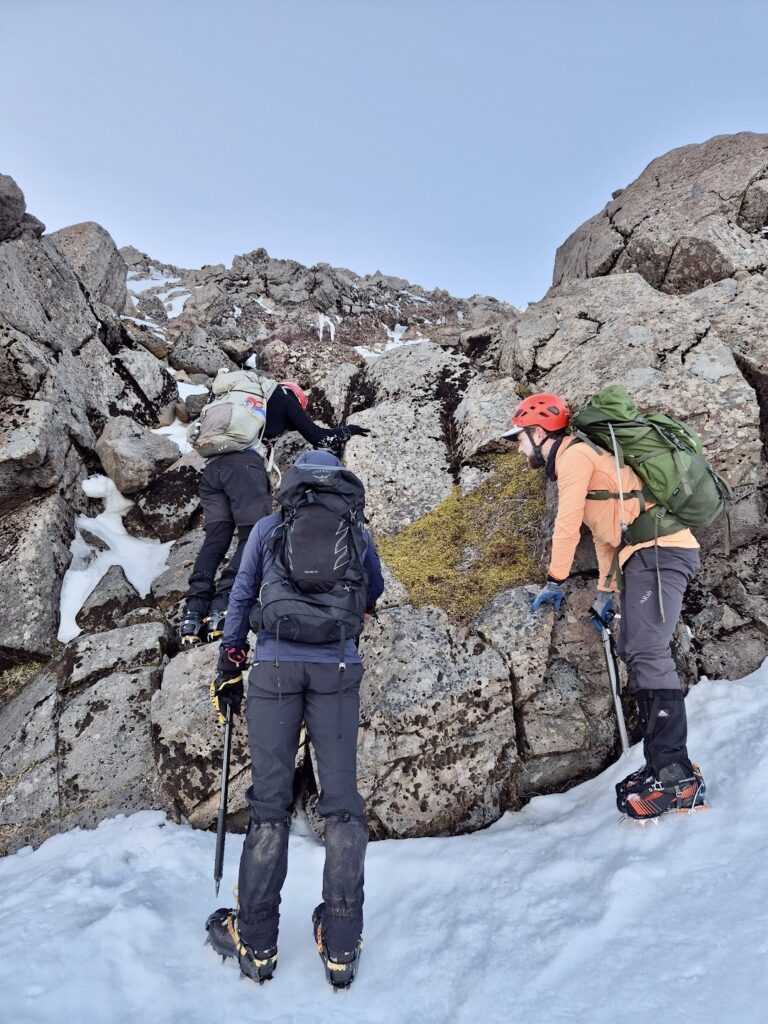
Mike and Tiffany studied the photo of the ridge that Tiffany had taken earlier, and they began scouting a route down. There was a nice slope towards the north, however reaching it required a mix of descending and climbing around rock bands just below the top of the ridge. Progress was slow, as everyone was taking extreme care with crampon and ice axe placement and the people at the front of the group periodically waited for the rear to catch up.
Eventually we found ourselves on an easier slope, breathed a collective sigh of relief, and started zig-zagging our way down. Even here, we were given reason to stay on our toes – during one short break, Ashleigh noticed a rock dislodging and she yelled out to warn other. Mike had to jump out of the way as the rock barrelled down past where we were standing.
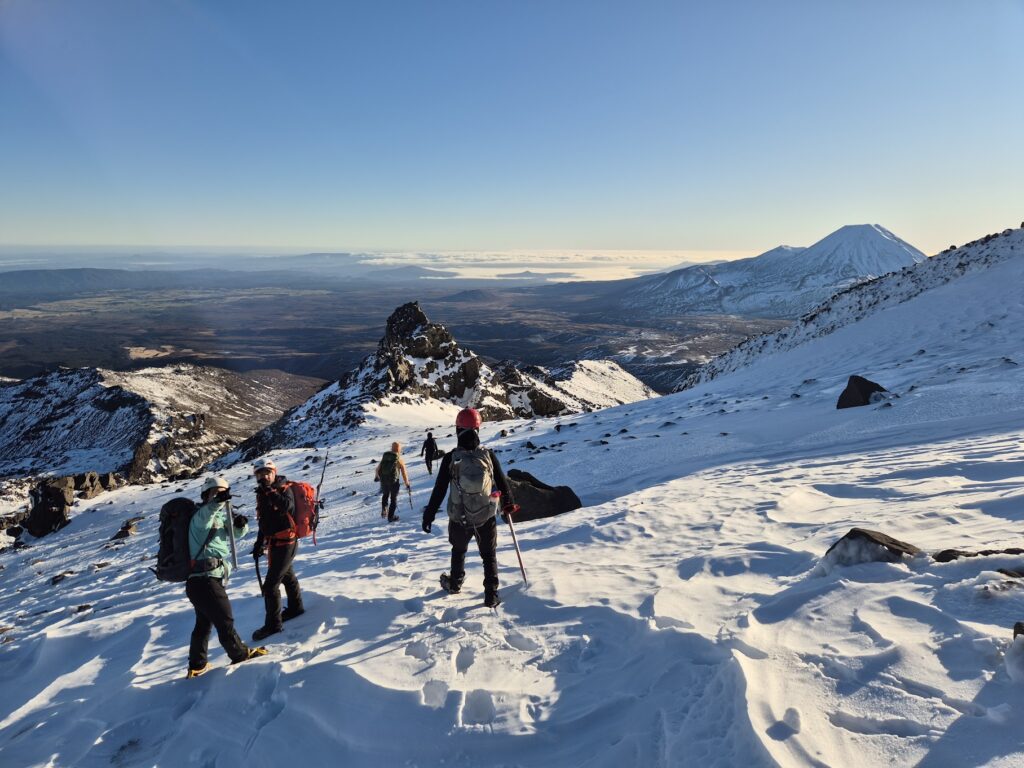
Further down the mountain, quiet concentration gave way to chatter and a few jokes, as we could see there were no more challenging sections to navigate.
Reaching the ski field before noon, we decided we had tested our alpine skills enough for one day and returned to the WTMC lodge. The other groups staying at the lodge had ticked off most of the tasks on the roster, so there were only a few jobs for our group to do, including polishing off as much of the leftover food as possible.
We got on the road early and made it back to Wellington by evening.
Summary
Overall, it was an extremely fun weekend spent on the snow. While we covered basic alpine techniques and theory comprehensively, we also had a lot of time to enjoy the mountain in spectacular weather.
Mike and Tiffany were excellent instructors, imparting lots of their knowledge to us and keeping us safe.
The final day on Pinnacle Ridge was a particular highlight, as it was an opportunity to consolidate all of the skills we had learnt on more technical terrain – a fantastic start to our future alpine adventures.