
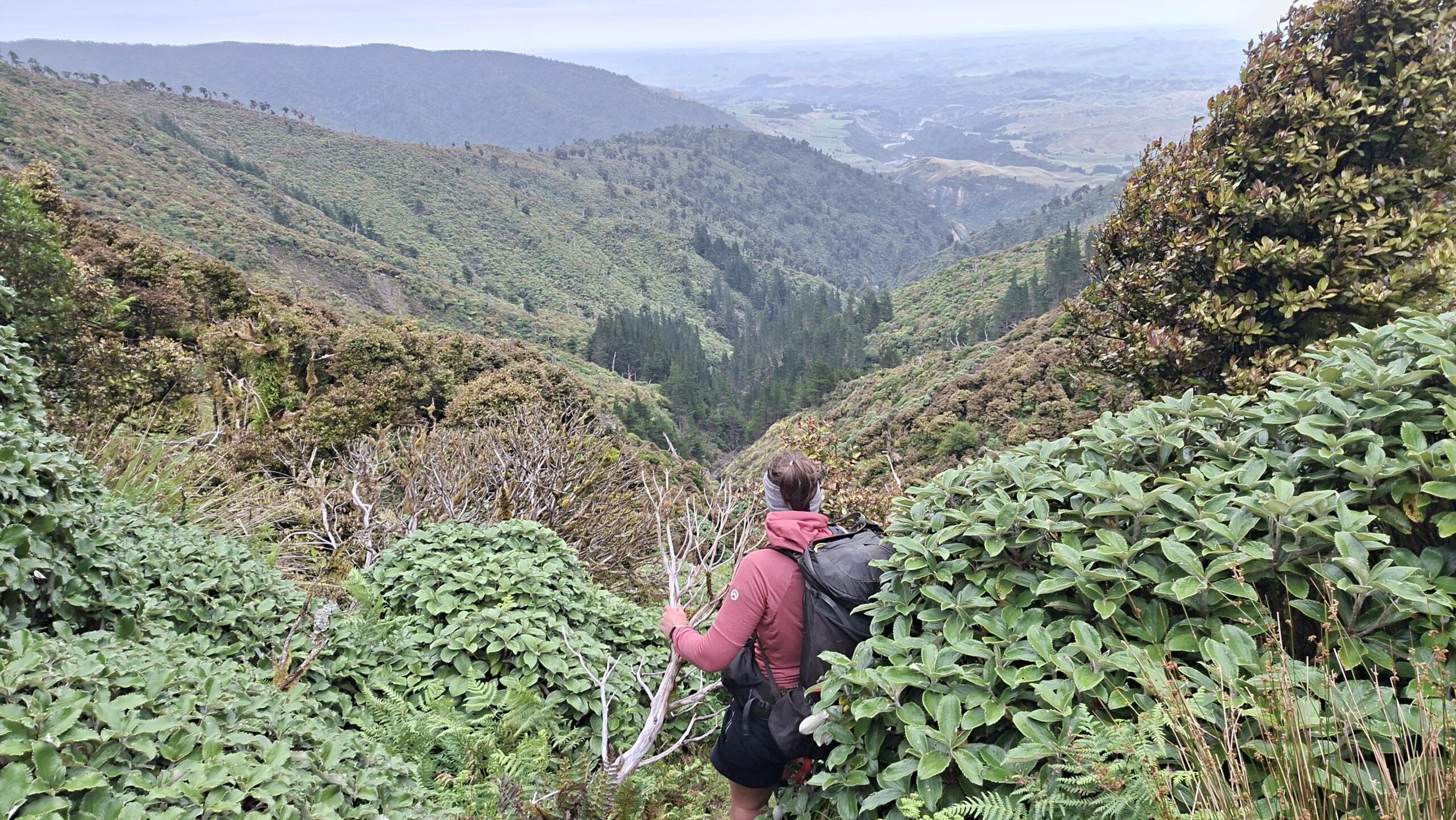
While we had originally hoped to packfloat down the Waiohine river, a stormy couple of days earlier in the week and light rain in the forecast meant that we had to turn our minds to Plan B in the Ruahines.
After last minute sickness in the group, only Tayla and I pitched our tents at the Totara Reserve Pohangina on Friday night (fancy toilets and showers, $11 per person, bargain!)
This Piripiri loop had been on my radar for a while, a mix of track and river travel, as well as some bushbashing and route finding. Perfect mix!
Previous research about the old track between Ngamoko and Piripiri huts had turned up ‘interesting’ results about ‘thick and tall leatherwood’ and ‘not to be repeated’ warnings, however it wasn’t until Saturday morning that I came across actual time estimates for the off track section: people reported taking 6 to 8 hours for the the innocent-looking 2.5 kilometre bushbash, which I thought would take us about 2 to 3 hours. How bad could it be?! We laughed. I updated our estimated time out and raise alarm time with the club emergency contact to allow for delays [Editor’s note: very responsible and much appreciated], and we were on our way…
Saturday (8 hours) – Ngamoko Hut, via Mid-Pohangina Hut
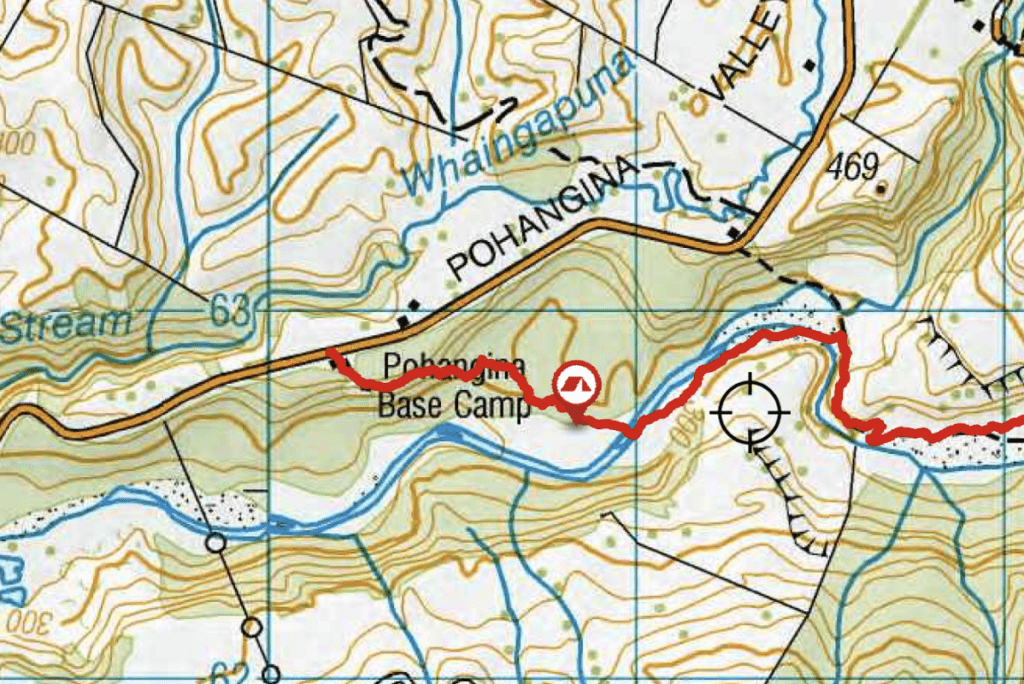
… almost. As it turned out, the beginning of the track on the Topo map is now closed to the public – with very clear No Trespassing signs. The friendly neighbour across the road gave us directions for the alternative track: Access is now via Pohangina base: walk through the base and to the back where the fire depot is. Jump the fence and follow the track marked with tape all the way down to the river. There is a good campsite at the bottom of the hill, although using river water wouldn’t be recommended as there is livestock upstream. From there, walk up river and join the DOC track. Allow about 1 hour from the Base to the fork between Piripiri Stream and Pohangina River.
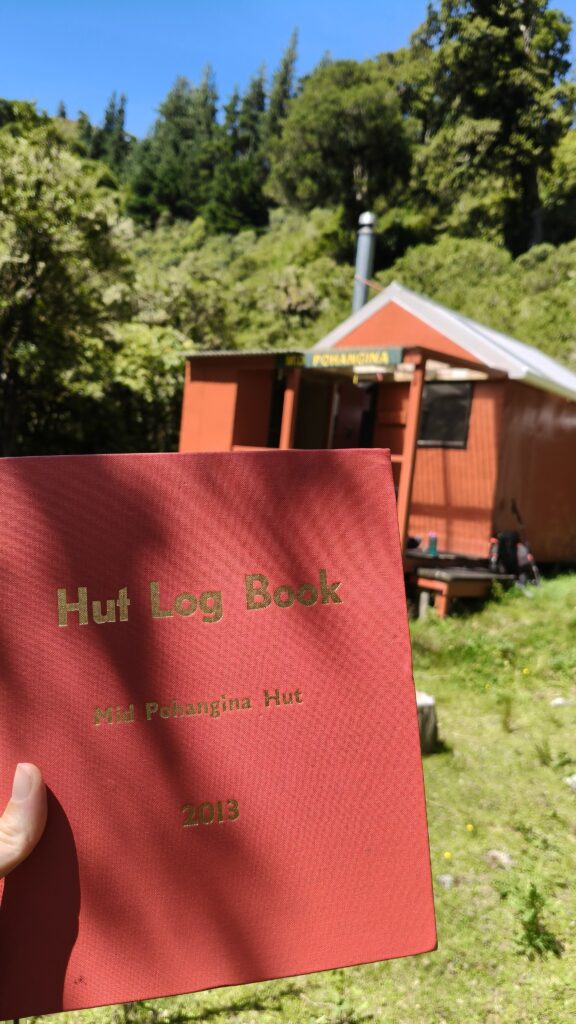
Following the track to Mid-Pohangina Hut was uneventful. There was no storm damage despite the weather that had come through a few weeks prior. The hut was in excellent condition, it featured a hut book that matched the colour of the hut and was well looked after by the Palmerston North Tramping and Mountaineering Club.
From there, we followed the river up to Ngamako Hut, relatively straightforward in low flow – a couple of ‘crotchers’ (technical term courtesy of TTC) but mostly knee deep crossings. We enjoyed a delightful swim in one of the pools, a few hundred meters downstream from Ngamoko Hut, and noted the remnants of the 2023 storms with logs awkwardly stuck mid air above large boulders, and what must have been half of the Leon Kinvig Hut deck, stuck between rocks.
Ngamoko Hut was also very cosy and in good condition. We quickly got comfortable, made a brew and perused the hut book for intel about the bushbash to Piripiri Hut. There were only a few people who had attempted the trip, and even fewer who were successful: ‘Never again’, ‘Horrendous leatherwood’ and ‘Gave up and turned around’ were the key themes coming through. Still… How bad could it be?! We laughed. The hut book also yielded the report of someone who had bailed from the leatherwood at the saddle, and had instead dropped down a nearby stream, navigating their way down 10 metre high waterfalls. We had to go in the opposite direction – travelling up gullies generally isn’t much fun and having to climb slippery waterfalls didn’t sound appealing.
While Tayla was still up for the original route, a potential 6 to 8 hours of horrendous leatherwood bushbash, plus the rest of the route, would have added to a 14 to 16 hour day. Add in a 3 hour drive to get home and a busy work week ahead of me, and I was intrigued but only moderately excited at this prospect. The idea of a cruisy walk back the way we came didn’t sound fun at all though, and we quickly discounted that option.
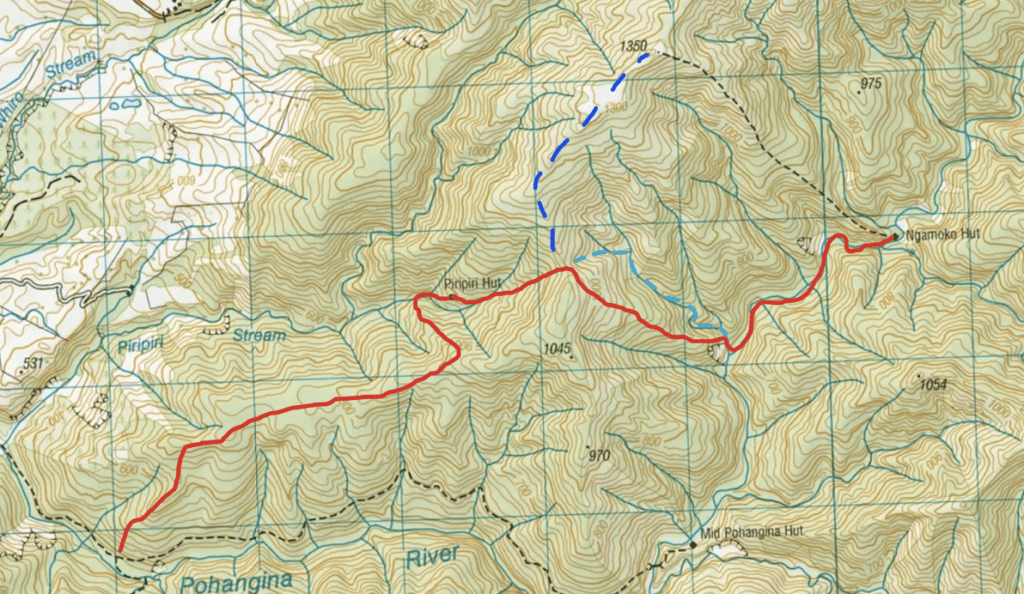
We settled on a compromise – we would try an untested but promising shortcut, which would involve back tracking down the river for 1.5 kilometres and heading up a defined spur at the slip. This would mean staying low, hopefully minimising leatherwood exposure and reducing travel distance. If the spur was a no go, we could always back track, head back the way we came and still make it home at a reasonable time.
Sunday (12 hours) – Out via Piripiri Hut (sounds simple)
Not knowing how long the day would take, we were out the door at 6.30am, just on time to hear (but not see) whio. We made our way down the river and were surprised and delighted to spot a healthy looking eel.
At the slip, we refilled with water to be fully stocked up for what was to come and headed up the side stream to catch the intended spur. Within 50 meters, we faced our first obstacle: a tall and dark looking waterfall, with no way through other than climbing up alongside the cascading water… Which turned out to be quite fun! We quickly decided to try heading up the stream.
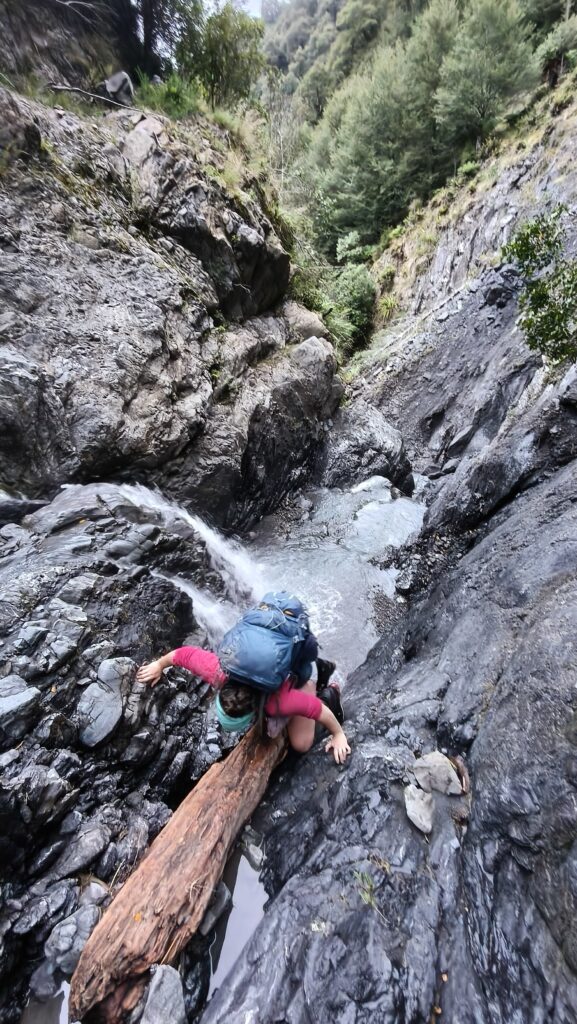
However, the following waterfalls, while not as tall, were very slippery and required very high sidles to get around them. We quickly did the maths – sticking with our intended route would probably be faster. We found a fairly straightforward way up to the spur and started making our way up. Once out of the stream, the vegetation was dense at times but travel was fairly straightforward and we moved at a good pace. We finally met leatherwood around the 1000 metre contour line, a bit later than anticipated. By then we were only a few hundred meters away from the saddle, which took about 30 to 40 minutes to cover. The leatherwood was high and thick indeed, and some crawling on all fours, bumsliding and awkward pushing through was necessary to inch our way forward. Travel was very slow, and it started making sense why others would have taken 6 to 8 hours to complete the original route, at higher elevation where the leatherwood might have been even denser.
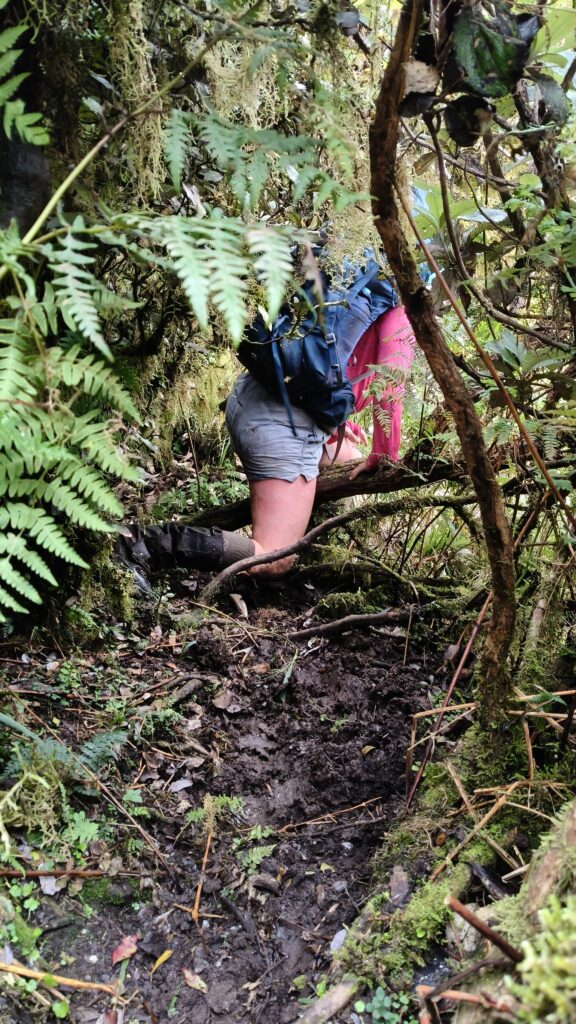
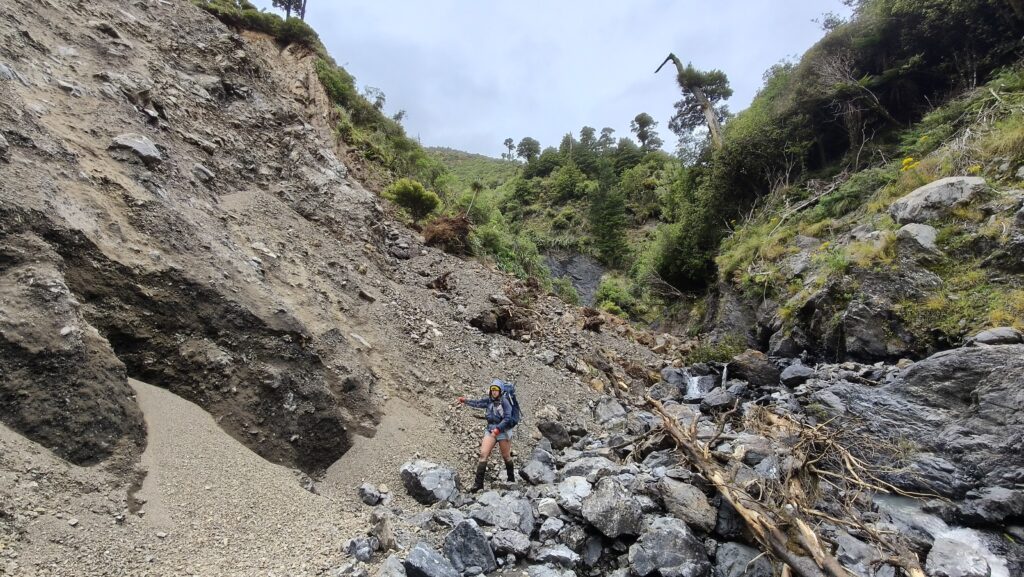
At the saddle, with no obvious way through, we squeezed down a small and muddy gully, which quickly turned into Piripiri stream, heavily damaged by last weekend’s weather. There were large, fresh slips and significant windfalls – these radiata pines hadn’t resisted the wind the way native trees had along Pohangina river, and the water wasn’t running clear. We made our way down without too much trouble, and left the stream early to approach Piripiri Hut from the top, which we found easily. The bushbash had taken 5 hours – we were just on time for an early lunch and treated ourselves to a hot drink to celebrate.
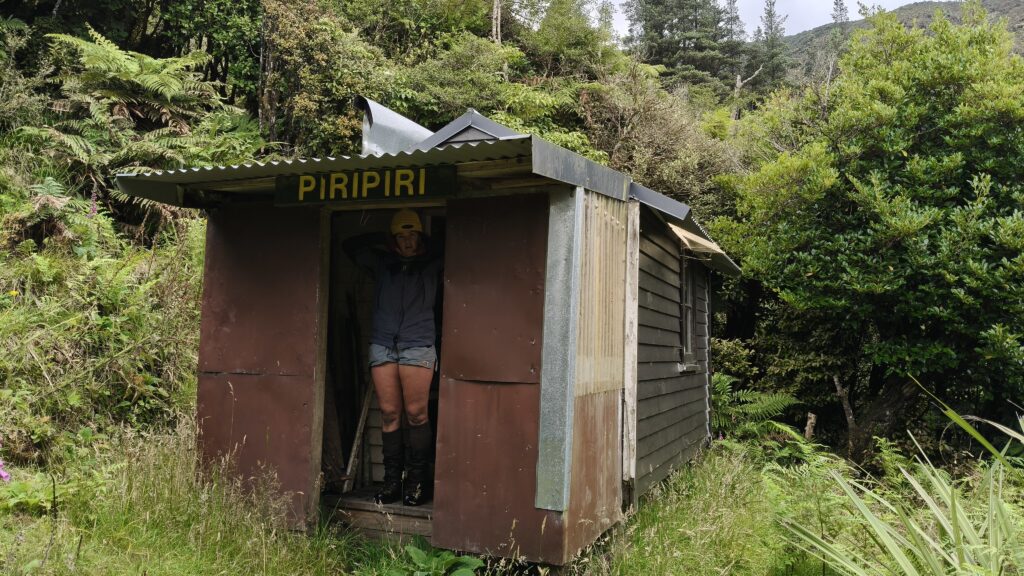
From there, we expected travel to be straightforward. We wanted to stay out of Piripiri stream to avoid trespassing further down and I had found several reports of a trapline, which was going to take us from Piripiri Hut, up to the main spur and back down to the track.
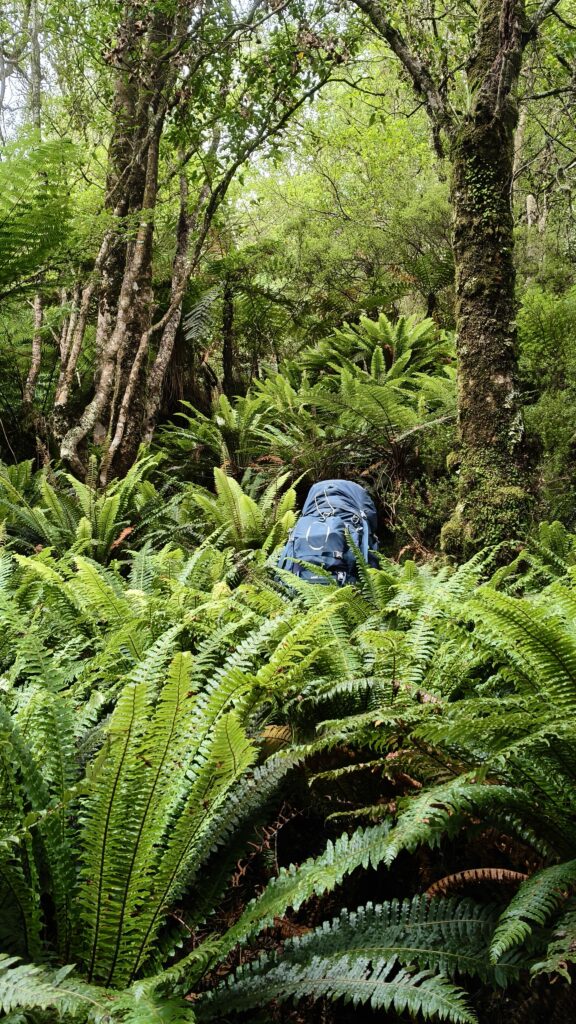
We found a way out of Piripiri stream easily, and started making our way up a fairly well defined side spur. As we approached the top however, the vegetation grew denser, and the spur became less pronounced. By the time we joined up with the main spur, there was no obvious way forward. While the odd bit of tape appeared every now and then, it was hard and sometimes impossible to find the next bit of tape. With no obvious ground trail to follow either, we took turn route finding and navigating our way down the spur – sometimes at sight following the path of least resistance, sometimes confirming our direction of travel with map and compass.
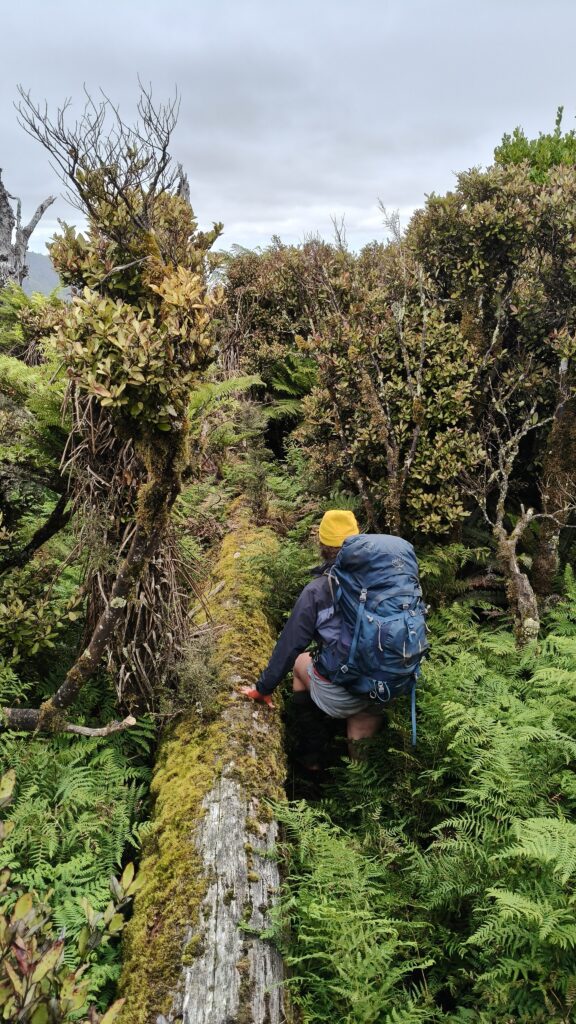
As we made our way down, orange triangles started to appear. While more regular, they were positioned awkwardly – often facing the track, rather than being perpendicular to the track, making it hard to spot from a distance. Eventually, the bush fully opened and travel got easier. With relief we eventually joined up the main track after another 5 hours of route finding from Piripiri Hut – which while not physically challenging was mentally tiring as we had to stay focused to find our way forward.
There are large orange triangles where the ‘trap line’ joins the main track, which would be easy to spot if you were trying to head up the trap line. The rest of the journey back to the car was a quick 2 hours along the track, down the river and out to Pohangina Base.
We had made it out in only 12 hours – not 16! We agreed a small dose of leatherwood had been enough, no need to come back for more. This Piripiri Hut loop had definitely delivered on the adventurous experience we were both looking for. Type I all the way!
Times (with breaks)
Pohangina Base to Mid-Pohangina Hut: 5 hours 30 minutes with lunch
Mid Pohangina to Ngamoko Hut: 2 hours 30 minutes
Ngamoko Hut to Piripiri Hut, via river and bushbash: 5 hours
Piripiri Hut to main track, via ‘trapline’: 5 hours with lunch
Track junction to Pohangina Base: 2 hours